




 Follow
With the scorching heat and constant sun exposure, you need sunscreen. Whether it is the sun’s season or winter or rainy, you need sunscreen for 365 days. There are times when we are confused about which sunscreen to choose or what to look for when buying sunscreen, as it allows us to pick the right one for the right skin.
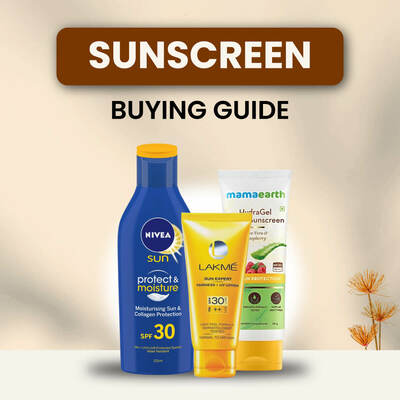
The sun’s rays are becoming increasingly harsh and extreme with each passing day, and protecting your skin is very important. Sunscreen acts as a layer on our skin, blocking the ability of UVA and UVB rays to cause skin cancer or skin pigmentation.
When you decide to buy sunscreen, just buying any bottle from the local market will not protect your skin completely. With hundreds of brands available, you should always consider the factors that are necessary when buying sunscreen.
In this article, we aim to provide some key factors which you must consider before buying sunscreen.
Buying sunscreen should not be difficult for anyone. We believe when one chooses to buy sunscreen they should consider various factors before choosing the right sunscreen as the market offers a wide range of brands who offer sunscreen to users but ultimately we fail to consider - what to look for when buying a sunscreen.
As mentioned before sunscreen is an integral part of your skincare routine, it helps protect your skin from harmful UVA and VB rays which causes premature ageing, pigmentation, skin cancer and many things.
The most important factor which one must consider while choosing the right sunscreen is by understanding the level of SPF. SPF stands for sun protection factor. It helps measure adequately how well the sunscreen can protect your skin from the harmful rays of sun.
The SPF rating over the sunscreen can protect your skin from sunburn .Although the protection may vary depending upon the reapplication of the sunscreen or whether it has been washed off.
Sunscreen does get washed off when there is a constant contact with sun and light. Dermatologists suggest that it is advisable to apply sunscreen every 2 or 3 hours for better and even protection. When you are deciding to choose the right sunscreen for yourself you should ideally look for sunscreen which has more than 15 SPF.
It is to be noted that higher the SPF does not imply higher protection. SPF is ideally selected based on the level of sun’s exposure and the weather of your city. However, an SPF above 50 provides only a marginal increase in protection and should not be used as an excuse to stay in the sun longer.
When you are looking to buy an SPF you should always opt for broad spectrum protection. Board spectrum protection implies how well the sunscreen can protect your skin against the UVA and UVB rays as these rays can penetrate deeper into your skin leading to skin issues and premature ageing. A broad spectrum sunscreen means it offers protection from both UVB and UVA rays, which have longer wavelengths and can penetrate deeper into the skin.
It is to be noted that when choosing the right sunscreen you should also check its label whether it is water resistant or not. Sometimes it so happens that we tend to assume water proof and water resistant are synonymous with each other but that's not true. Waterproof is when a product is highly resistant to water whereas water resistance is when a product possesses certain properties or chances of coming into contact with water or getting washed off.
If you are someone who loves outdoor activities and likes swimming then you must select sunscreen which are water resistant. Water Resistant tells you that the sunscreen will stay on wet or sweaty skin for a while before you need to reapply. Water resistance lasts either 40 or 80 minutes. Not all sunscreens offer water resistance.
The sunscreen market has expanded a lot with time. Earlier it was just a normal sunscreen for all skin types with super creamy and non - avoidable white cast but now the market has expanded to a level where we can find sunscreen according to our skin type.
One of the other most important factors for buying a sunscreen is to look whether that sunscreen is off your skin type or not. So when a dry skin individual decides to buy a sunscreen he/ she can definitely check out sunscreens which are hydrating or dewy in texture which provides hydration as well as sun protection.
Similarly an oily skin individual can go for sunscreen which are matt in texture and reduces sebum production as it helps protect the skin without making it appear oily.
Buying sunscreen can be easily possible when you know your level of sun’s exposure. Level of sun exposure implies how the condition of your skin is based on the external environment. Yes, the level of sun exposure varies depending upon the activities, time of the day, geographical conditions, water and many other factors .If you have a level of sun exposure then you must choose sunscreen which has PA+++ rating with an SPF of 50 or something in between.
Your sunscreen will be only effective when you understand the method of its application. As much as it is important to buy sunscreen it is also very important to understand its application and re- application.
When you choose the right sunscreen you must understand its game of application. Make sure you apply the sunscreen correctly at least 20-30 minutes before you go outdoors. This gives the sunscreen ample time to work before your skin is exposed to the sun. Be generous with the amount of sunscreen you use, as it’s better to put on slightly too much than not enough.
Sun damage can occur when we don’t apply enough sunscreen, or if we don’t apply it frequently enough. For adults, apply at least 5ml (one teaspoon) for each area of the body – leg, face, neck, arm, etc. For your whole body, as a rough guide you might use 35ml (seven teaspoons). Obviously if you’re a bigger/taller person, you might need more, and if you’re a smaller person, you might need less. Apply sunscreen to all areas of the body that aren’t covered by clothing.
When you are looking to buy a sunscreen it is important to understand the ingredients and read the label of it. As it helps you to judge which ingredients to avoid as certain harmful ingredients =may pose risks to your skin, health, and the environment. Here are the top ingredients to watch out for:
1. Oxybenzone: It is an ingredient which is linked to skin allergies and environmental harm,.
2. Octinoxate (Octyl Methoxycinnamate): May disrupt hormones and cause skin irritation.
3. Homosalate:Can accumulate in the body faster than it can be eliminated further it also enhances the absorption of other harmful chemicals.
4. Octocrylene: Often contaminated with benzophenone, a possible carcinogen.
5. Avobenzone (when unstable): A good UVA blocker, it breaks down quickly in sunlight unless stabilized with other chemicals, which may lead to irritation.
6. Parabens (e.g., Methylparaben, Propylparaben):Used as preservatives but can mimic estrogen and disrupt hormones. May contribute to skin aging when exposed to UV light.
7. Synthetic Fragrances and Alcohols: Can trigger skin irritation, allergies, and sensitivity, especially in sensitive skin.
8. Retinyl Palmitate (Vitamin A derivative): May speed up skin damage and increase the risk of sun-induced skin cancer.
For safer alternatives, look for mineral sunscreens with non-nano zinc oxide or titanium dioxide and products labeled "reef-safe" and fragrance-free for minimal skin irritation and environmental impact.
Sunscreens are categorized into two main types: chemical and mineral, distinguished primarily by their active ingredients.
Chemical sunscreens contain a blend of chemical compounds that absorb UVA and UVB rays, triggering a reaction that converts UV radiation into heat, which is then released from the skin.
Mineral (or physical) sunscreens, on the other hand, use naturally occurring minerals like titanium dioxide and zinc oxide to create a protective barrier on the skin’s surface. These minerals act like tiny mirrors, reflecting and deflecting UV rays away from the body.
Both types effectively protect against UV radiation, but many experts favor mineral sunscreens due to their photostability, broad-spectrum protection, and immediate effectiveness upon application.
Sometimes when buying a sunscreen we often assume that sunscreen and sunblock are the same but this is not true.
To know what to buy when you are choosing a sunscreen you should know that sunscreen and sunblock both are devised to protect your skin from harmful rays of the sun but the real difference lies in their application and ingredients.
Sunblock and sunscreen both provide sun protection and have their cons and pros but sunblock seems to be mostly avoided as it contains a lot of chemical ingredients which may end up leading to skin irritation. SO choosing the right sunscreen is important and understanding its variations to mark out what fits you is even more important.
Choosing Pharmacy or Dermatologist recommended sunscreen is a preferred option when you are looking for buying a right sunscreen. It is suggested that you should look for Dermatologist recommended sunscreen as - Not all sunscreens are created equally and purely.
The reason why Pharmacy or Dermatologist sunscreens stands superior to skincare brand base sunscreen is because of its efficacy and ingredient purity of the product.
OTC sunscreens or skincare brand formulated sunscreen found in drugstores, often contain only 70% pure active ingredients, diluted with fillers, fragrances, and preservatives providing less protection. Meanwhile, pharmaceutical-grade sunscreens contain 99.9% pure active ingredients, backed by scientific research, and proven effective for skin health.
Reason why one should opt for Dermat recommended sunscreen is because they are
Fragrance free
Sensitive skin friendly
Skin type based formulation
Non comodogenic (will not clog your pores)
Don’t buy sunscreen based on price: Expensive doesn’t always mean better and cheap does not mean ineffective. When you are looking to buy sunscreen, always consider and understand the actors which are mentioned above to choose the right sunscreen for you.
Avoid Expired Products: Sunscreen loses its effectiveness over time, so always check the expiration date.
Don’t Ignore the Reapplication Factor: Even the best sunscreen needs to be reapplied every two hours or after swimming/sweating.
Skipping Sunscreen on Cloudy Days: Up to 80% of UV rays penetrate clouds, so daily application is crucial, regardless of the weather.
Final Thoughts
Finding the right sunscreen requires understanding SPF levels, broad-spectrum protection, ingredients, and your skin type. If you’ve ever wondered, What to look for when buying a sunscreen?, this guide provides all the information you need to make an informed decision. By avoiding common mistakes and choosing a sunscreen that meets your skin’s needs, you can ensure maximum protection against harmful UV rays while maintaining healthy, radiant skin.
Choosing the right sunscreen is essential for safeguarding your skin against the sun’s harmful rays. By considering factors such as SPF, broad-spectrum protection, PA, water resistance, skin type, and cosmetic appeal, you can make an informed decision that suits your needs. Remember to consult with your dermatologist if you have specific concerns or conditions. Prioritizing sunscreen as a part of your daily skincare routine will help protect your skin’s health, prevent premature aging, and reduce the risk of skin cancer. Stay sun-safe and enjoy the outdoors with confidence!




















With the scorching heat and constant sun exposure, you need sunscreen. Whether it is the sun’s season or winter or rainy, you need sunscreen for 365 days. There are times when we are confused about which sunscreen to choose or what to look for when buying sunscreen, as it allows us to pick the right one for the right skin.
The sun’s rays are becoming increasingly harsh and extreme with each passing day, and protecting your skin is very important. Sunscreen acts as a layer on our skin, blocking the ability of UVA and UVB rays to cause skin cancer or skin pigmentation.
When you decide to buy sunscreen, just buying any bottle from the local market will not protect your skin completely. With hundreds of brands available, you should always consider the factors that are necessary when buying sunscreen.
In this article, we aim to provide some key factors which you must consider before buying sunscreen.
Buying sunscreen should not be difficult for anyone. We believe when one chooses to buy sunscreen they should consider various factors before choosing the right sunscreen as the market offers a wide range of brands who offer sunscreen to users but ultimately we fail to consider - what to look for when buying a sunscreen.
As mentioned before sunscreen is an integral part of your skincare routine, it helps protect your skin from harmful UVA and VB rays which causes premature ageing, pigmentation, skin cancer and many things.
The most important factor which one must consider while choosing the right sunscreen is by understanding the level of SPF. SPF stands for sun protection factor. It helps measure adequately how well the sunscreen can protect your skin from the harmful rays of sun.
The SPF rating over the sunscreen can protect your skin from sunburn .Although the protection may vary depending upon the reapplication of the sunscreen or whether it has been washed off.
Sunscreen does get washed off when there is a constant contact with sun and light. Dermatologists suggest that it is advisable to apply sunscreen every 2 or 3 hours for better and even protection. When you are deciding to choose the right sunscreen for yourself you should ideally look for sunscreen which has more than 15 SPF.
It is to be noted that higher the SPF does not imply higher protection. SPF is ideally selected based on the level of sun’s exposure and the weather of your city. However, an SPF above 50 provides only a marginal increase in protection and should not be used as an excuse to stay in the sun longer.
When you are looking to buy an SPF you should always opt for broad spectrum protection. Board spectrum protection implies how well the sunscreen can protect your skin against the UVA and UVB rays as these rays can penetrate deeper into your skin leading to skin issues and premature ageing. A broad spectrum sunscreen means it offers protection from both UVB and UVA rays, which have longer wavelengths and can penetrate deeper into the skin.
It is to be noted that when choosing the right sunscreen you should also check its label whether it is water resistant or not. Sometimes it so happens that we tend to assume water proof and water resistant are synonymous with each other but that's not true. Waterproof is when a product is highly resistant to water whereas water resistance is when a product possesses certain properties or chances of coming into contact with water or getting washed off.
If you are someone who loves outdoor activities and likes swimming then you must select sunscreen which are water resistant. Water Resistant tells you that the sunscreen will stay on wet or sweaty skin for a while before you need to reapply. Water resistance lasts either 40 or 80 minutes. Not all sunscreens offer water resistance.
Best Sheet mask in India
The sunscreen market has expanded a lot with time. Earlier it was just a normal sunscreen for all skin types with super creamy and non - avoidable white cast but now the market has expanded to a level where we can find sunscreen according to our skin type.
One of the other most important factors for buying a sunscreen is to look whether that sunscreen is off your skin type or not. So when a dry skin individual decides to buy a sunscreen he/ she can definitely check out sunscreens which are hydrating or dewy in texture which provides hydration as well as sun protection.
Similarly an oily skin individual can go for sunscreen which are matt in texture and reduces sebum production as it helps protect the skin without making it appear oily.
Buying sunscreen can be easily possible when you know your level of sun’s exposure. Level of sun exposure implies how the condition of your skin is based on the external environment. Yes, the level of sun exposure varies depending upon the activities, time of the day, geographical conditions, water and many other factors .If you have a level of sun exposure then you must choose sunscreen which has PA+++ rating with an SPF of 50 or something in between.
Your sunscreen will be only effective when you understand the method of its application. As much as it is important to buy sunscreen it is also very important to understand its application and re- application.
When you choose the right sunscreen you must understand its game of application. Make sure you apply the sunscreen correctly at least 20-30 minutes before you go outdoors. This gives the sunscreen ample time to work before your skin is exposed to the sun. Be generous with the amount of sunscreen you use, as it’s better to put on slightly too much than not enough.
Sun damage can occur when we don’t apply enough sunscreen, or if we don’t apply it frequently enough. For adults, apply at least 5ml (one teaspoon) for each area of the body – leg, face, neck, arm, etc. For your whole body, as a rough guide you might use 35ml (seven teaspoons). Obviously if you’re a bigger/taller person, you might need more, and if you’re a smaller person, you might need less. Apply sunscreen to all areas of the body that aren’t covered by clothing.
When you are looking to buy a sunscreen it is important to understand the ingredients and read the label of it. As it helps you to judge which ingredients to avoid as certain harmful ingredients =may pose risks to your skin, health, and the environment. Here are the top ingredients to watch out for:
1. Oxybenzone: It is an ingredient which is linked to skin allergies and environmental harm,.
2. Octinoxate (Octyl Methoxycinnamate): May disrupt hormones and cause skin irritation.
3. Homosalate:Can accumulate in the body faster than it can be eliminated further it also enhances the absorption of other harmful chemicals.
4. Octocrylene: Often contaminated with benzophenone, a possible carcinogen.
5. Avobenzone (when unstable): A good UVA blocker, it breaks down quickly in sunlight unless stabilized with other chemicals, which may lead to irritation.
6. Parabens (e.g., Methylparaben, Propylparaben):Used as preservatives but can mimic estrogen and disrupt hormones. May contribute to skin aging when exposed to UV light.
7. Synthetic Fragrances and Alcohols: Can trigger skin irritation, allergies, and sensitivity, especially in sensitive skin.
8. Retinyl Palmitate (Vitamin A derivative): May speed up skin damage and increase the risk of sun-induced skin cancer.
For safer alternatives, look for mineral sunscreens with non-nano zinc oxide or titanium dioxide and products labeled "reef-safe" and fragrance-free for minimal skin irritation and environmental impact.
Sunscreens are categorized into two main types: chemical and mineral, distinguished primarily by their active ingredients.
Chemical sunscreens contain a blend of chemical compounds that absorb UVA and UVB rays, triggering a reaction that converts UV radiation into heat, which is then released from the skin.
Mineral (or physical) sunscreens, on the other hand, use naturally occurring minerals like titanium dioxide and zinc oxide to create a protective barrier on the skin’s surface. These minerals act like tiny mirrors, reflecting and deflecting UV rays away from the body.
Both types effectively protect against UV radiation, but many experts favor mineral sunscreens due to their photostability, broad-spectrum protection, and immediate effectiveness upon application.
Sometimes when buying a sunscreen we often assume that sunscreen and sunblock are the same but this is not true.
To know what to buy when you are choosing a sunscreen you should know that sunscreen and sunblock both are devised to protect your skin from harmful rays of the sun but the real difference lies in their application and ingredients.
Sunblock and sunscreen both provide sun protection and have their cons and pros but sunblock seems to be mostly avoided as it contains a lot of chemical ingredients which may end up leading to skin irritation. SO choosing the right sunscreen is important and understanding its variations to mark out what fits you is even more important.
Choosing Pharmacy or Dermatologist recommended sunscreen is a preferred option when you are looking for buying a right sunscreen. It is suggested that you should look for Dermatologist recommended sunscreen as - Not all sunscreens are created equally and purely.
The reason why Pharmacy or Dermatologist sunscreens stands superior to skincare brand base sunscreen is because of its efficacy and ingredient purity of the product.
OTC sunscreens or skincare brand formulated sunscreen found in drugstores, often contain only 70% pure active ingredients, diluted with fillers, fragrances, and preservatives providing less protection. Meanwhile, pharmaceutical-grade sunscreens contain 99.9% pure active ingredients, backed by scientific research, and proven effective for skin health.
Reason why one should opt for Dermat recommended sunscreen is because they are
Fragrance free
Sensitive skin friendly
Skin type based formulation
Non comodogenic (will not clog your pores)
Don’t buy sunscreen based on price: Expensive doesn’t always mean better and cheap does not mean ineffective. When you are looking to buy sunscreen, always consider and understand the actors which are mentioned above to choose the right sunscreen for you.
Avoid Expired Products: Sunscreen loses its effectiveness over time, so always check the expiration date.
Don’t Ignore the Reapplication Factor: Even the best sunscreen needs to be reapplied every two hours or after swimming/sweating.
Skipping Sunscreen on Cloudy Days: Up to 80% of UV rays penetrate clouds, so daily application is crucial, regardless of the weather.
Best hair serums in India
Final Thoughts
Finding the right sunscreen requires understanding SPF levels, broad-spectrum protection, ingredients, and your skin type. If you’ve ever wondered, What to look for when buying a sunscreen?, this guide provides all the information you need to make an informed decision. By avoiding common mistakes and choosing a sunscreen that meets your skin’s needs, you can ensure maximum protection against harmful UV rays while maintaining healthy, radiant skin.
Choosing the right sunscreen is essential for safeguarding your skin against the sun’s harmful rays. By considering factors such as SPF, broad-spectrum protection, PA, water resistance, skin type, and cosmetic appeal, you can make an informed decision that suits your needs. Remember to consult with your dermatologist if you have specific concerns or conditions. Prioritizing sunscreen as a part of your daily skincare routine will help protect your skin’s health, prevent premature aging, and reduce the risk of skin cancer. Stay sun-safe and enjoy the outdoors with confidence!